

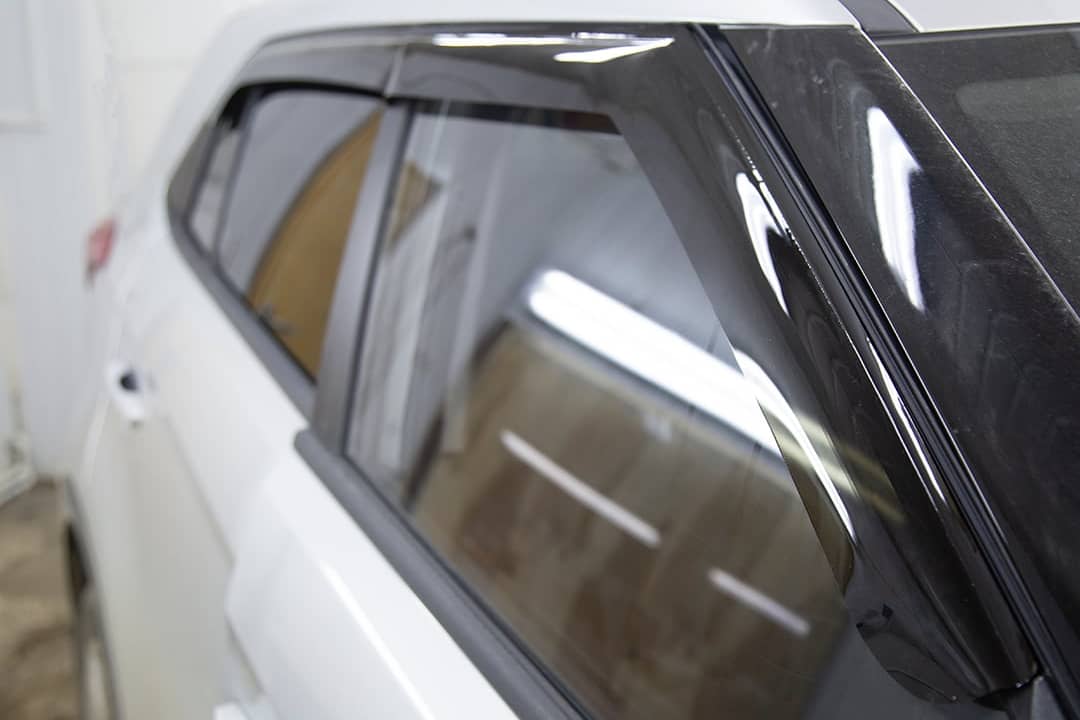
Potashev Aleksandr // Shutterstock
In-channel rain guards vs. stick-on: 3 key differences drivers should know
Rain guards are slim, aerodynamic accessories that mount above your vehicle’s side windows. Their main job is to redirect rain, wind, and road debris away from partially open windows, allowing you to let in fresh air—even in bad weather—without soaking your interior or dealing with loud wind noise.
They also help reduce window fogging, minimize sun glare, and can even enhance the overall look of your vehicle. Whether you’re commuting, road-tripping, or just running errands, Husky Liners explains the differences between in-channel and stick-on rain guards and breaks down how they can add comfort and functionality to your daily drive.
In-Channel Rain Guards vs. Stick-On Rain Guards: The 3 Key Differences
Now that you know what rain guards do, let’s take a closer look at how in-channel and stick-on styles differ—starting with how each one is designed. While both serve the same purpose, their construction and fitment offer distinct pros and cons.
Husky Liners
Design
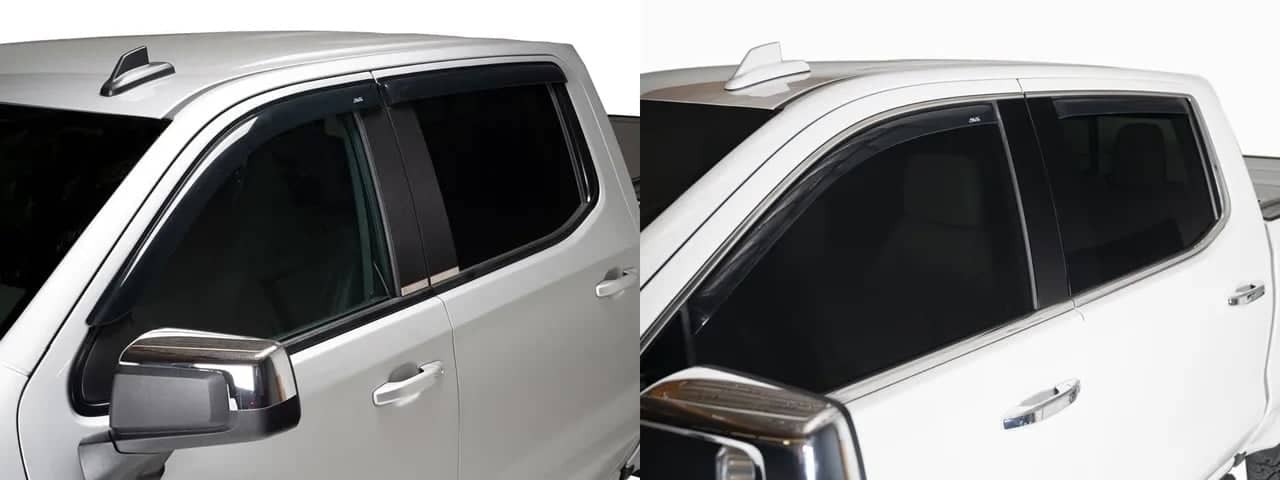
In-channel rain guards are engineered to fit directly into the window channel, or the narrow track where the window slides up and down. This design creates a sleek, flush-mounted look that blends smoothly with the window frame. Since they tuck into the channel, no adhesive is applied to your vehicle’s painted surfaces.
On the other hand, stick-on rain guards (also called tape-on deflectors) adhere to the exterior of the doorframe using automotive-grade adhesive tape. This design gives them a slightly more pronounced appearance but also allows for a wider fit range across different vehicle models.
While both offer reliable protection and airflow control, the choice primarily depends on whether you prefer a more integrated appearance or a straightforward, utility-focused solution.
Installation Procedure
While both types of rain guards are DIY-friendly, their installation processes vary.
In-channel rain guards slide into the upper window channel and often include adhesive strips along the inside edge for extra security. Installation typically involves cleaning the channel, doing a dry fit, peeling the adhesive backing, and pressing the guard into place. After installation, you’ll need to keep the windows rolled up for 24 to 48 hours to help the guards seat properly and avoid interference with window operation.
Alternatively, stick-on rain guards are even simpler to install. These use automotive-grade adhesive to attach directly to the outside of the doorframe. After cleaning the surface, you peel off the backing and press the visor into place, with no tools, no waiting period, and no fuss.
In short, in-channel deflectors require more finesse but offer a cleaner look, while stick-on options are quicker to install and more forgiving for first-time DIYers.
Aesthetics
When it comes to appearance, both styles offer a sleek upgrade, but the finish and fit are where the differences stand out.
In-channel rain guards have a more seamless, factory-style appearance. Because they sit inside the window channel, they follow the natural lines of the vehicle and appear more integrated. This low-profile look is popular with drivers who want subtle styling that doesn’t distract from their vehicle’s design.
Stick-on rain guards are slightly more visually prominent, since they mount directly onto the doorframe. While they still offer a clean, contoured look, they’re generally more noticeable than in-channel versions—something many drivers prefer for the added contrast and aggressive styling.
Ultimately, the aesthetic difference comes down to personal taste. Whether you’re going for a refined original equipment manufacturer (OEM) feel or a bold, functional accent, there’s a rain guard style to match your vision.
This story was produced by Husky Liners and reviewed and distributed by Stacker.

