
Protective Measures for Lift Station Service and Repairs
Fort Mayers, United States – March 6, 2026 / South Florida Lift Stations /
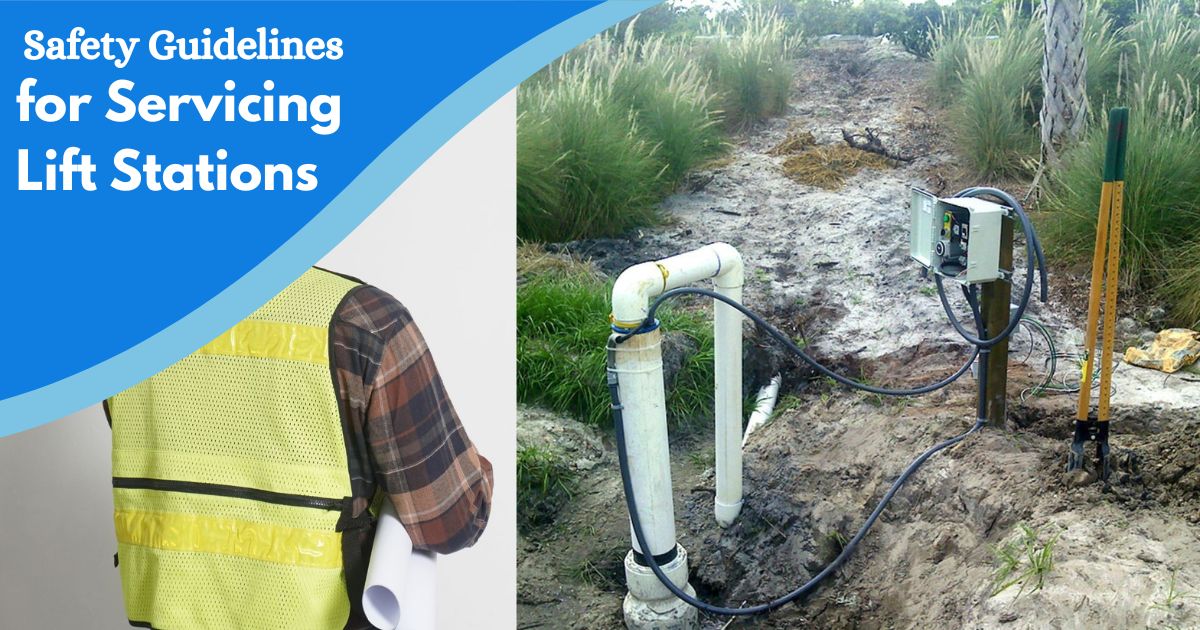
Before you even think about servicing a lift station, you should treat the area like a secret base and your equipment like a life raft. You prepare for the task at hand by dividing up responsibilities, learning about potential biohazards and slip hazards, and donning the appropriate personal protective equipment. You make sure that all instruments are intrinsically safe, check the ventilation, and confirm confined space permits. Because a single misstep can have a domino effect, you must first turn off the power, inspect the wiring and potting, and verify the controls and cooling. Now you must face…
Understanding Classified Locations and Hazloc Equipment
Before you choose pumps and controls, you need to know whether the lift station sits in a classified location—a potentially combustible environment defined by NFPA 820.
Assess hazardous locations, such as wet wells containing methane or hydrogen sulfide, then match equipment to the zone.
Meet HazLoc certification requirements and applicable explosion-proof standards for motors, seals, cables, and cord entries.
Follow material selection guidelines: use non-sparking alloys for sliding interfaces and corrosion-resistant metals for long service life.
Specify intrinsically safe control circuits and isolation barriers.
Prioritize ignition source prevention by managing temperature, arc, and fault energy limits, and verifying compliant labeling and documentation.
Pre-Job Planning, PPE, and Confined Space Protocols
Even when the site looks routine, treat every lift-station job as a planned operation with defined roles, hazards, and controls.
Start with a pre-job checklist that verifies permits, atmospheric testing gear, ventilation, and retrieval systems.
Perform a risk assessment for biohazards, engulfment, slip hazards, and traffic.
Confirm training requirements for confined space entry, gas monitoring, and first aid.
Establish communication protocols before anyone enters; test radios and hand signals.
Review emergency procedures, assign an attendant, and stage rescue equipment.
Document readings, lockout sources, and verify PPE: gloves, chemical suits, eye/face protection, and respirators.
- Calibrate gas monitors
- Verify tripod/winch
- Test ventilation
- Inspect harnesses
Electrical Safety: Intrinsic Safety, Potting, and Code Compliance
You’ve planned the entry and verified PPE; now protect people and assets from electrical hazards that can ignite a hazardous atmosphere.
Confirm classified-area ratings and apply intrinsic safety measures to isolate field devices from higher-energy circuits. Verify approved barriers, grounding, and segregation at electrical interface connections.
Inspect potting techniques in conduit seals to block gas migration; repour or replace any compromised seals. Perform hazard assessments to validate assumptions and document findings.
Test dead, lockout/tagout, and maintain clear labeling. Follow code compliance standards such as NFPA 820, NEC Articles 500–505, and local amendments.
Record corrections and sign off before re-energizing.
Operational Checks: Level Controls, Thermal Protection, and Cooling Requirements
While electrical safety establishes the baseline, operational checks guarantee that the station operates within safe limits each cycle.
Check the calibration of the level sensor to ensure that the start/stop points do not short-cycle or overflow. Confirm that the control panel adjustments correspond to the pump curves, and set the thermal overload settings to the manufacturer’s specifications.
Validate pump cooling techniques—submergence depth, recirculation, or jacketed cooling—so motors don’t overheat during low-flow periods. Document operational safety checks before returning the station to service.
- Test each float or transducer through the full range and simulate a high-level alarm.
- The time pump starts to detect nuisance cycling.
- Measure motor current versus nameplate FLA.
- Confirm that the seal and thermal inputs trip and auto-reset correctly.
Maintenance Best Practices and Post-Service Verification
With operational checks confirmed, shift to maintenance that prevents repeat faults and verifies the station is safe to place back online.
Standardize inspections with safety audits before and after service. Update your equipment inventory to track spare pumps, seals, cords, PPE, and gas monitors.
Follow maintenance schedules for lubrication, seal checks, impeller clearance, panel terminations, and alarm verification.
Tighten connections, reseal cord entries, and test intrinsic safety barriers. Validate float or level transmitters through full-range simulation.
Capture findings in service documentation with torque values, megger readings, and setpoints.
Close gaps through technician training, and complete a functional wet-well run to confirm a reliable restart.
South Florida Lift Stations: Your Trusted Partner in Safety and Performance
If you’re looking for a team that prioritizes dependability, accuracy, and safety, go no further than South Florida Lift Stations. Your lift stations will operate cleaner, safer, and longer thanks to their seasoned technicians’ decades of experience in the field, knowledge gained from manufacturer training, and unwavering dedication to code-compliant workmanship. As a full-service partner, they provide complete support and high-quality pumping solutions. South Florida Lift Stations provides comprehensive services, including confined space and HazLoc best practices, meticulous verification of level controls, motor protection, cooling checks, and comprehensive documentation.
Clients count on them for rapid response, accurate diagnoses, and fixing issues right the first time—minimizing downtime and safeguarding your people, property, and budget. Their proactive maintenance programs keep systems optimized, while their rigorous commissioning and final operational verification ensure you leave every service event with confidence.
South Florida Lift Stations prioritizes safety as the foundation for delivering dependable performance and measurable value. Put their expertise to work and experience a lift station partner that makes your job easier, your operations smoother, and your sites safer—every time.

Contact Information:
South Florida Lift Stations
3056 South Street
Fort Mayers, FL 33916
United States
Public Relations
(239) 332-0041
https://www.southflls.com/

